
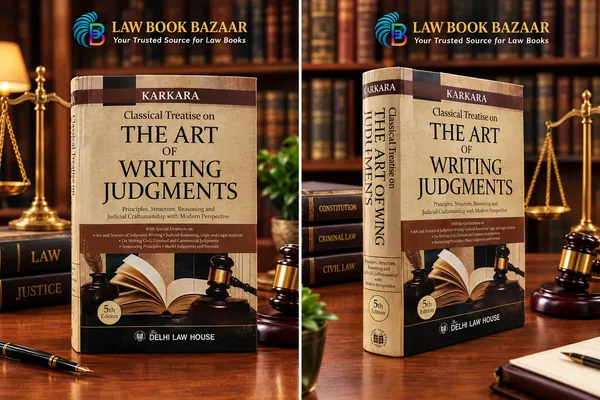

Karkara�s Classical Treatise on The Art of Writing Judgments (5th Edition)
₹1,515
₹1,895
20% OffFinal Price inclusive of all taxes
Cash on Delivery
Get it delivered in 3-7 days
size
Free Size
Product Information
Binding Type
Hardbound
Language
English
ISBN
9789388918787
Publication
Delhi Law House
Material
Paper
Pack Of
1
Ideal For
? Judicial Service Aspirants (PCS-J, Civil Judge, Judicial Magistrate, APO) ? Judges and Judicial Officers ? Advocates and Legal Practitioners ? Law Students (LL.B., LL.M.) ? Legal Academicians and Researchers ? Tribunal Members and Quasi-Judicial Authorities ? Public Prosecutors and Government Law Officers ? Legal Drafting and Judgment Writing Training Programs ? Law Libraries and Judicial Academies
COO
India
Product Description
Master the Craft of Judicial Writing with One of the Most Respected Guides on Judgment Writing
Classical Treatise on The Art of Writing Judgments by Karkara is a distinguished and practical guide dedicated to the principles, techniques, and judicial craftsmanship involved in writing clear, reasoned, and legally sound judgments. Published by Delhi Law House, this authoritative work is widely valued by judges, judicial officers, advocates, law students, and judicial service aspirants seeking excellence in legal reasoning and judicial decision-making.
Now in its 5th Edition, this comprehensive treatise explores the art and science of judgment writing from both traditional and modern perspectives. The book provides detailed guidance on structuring judgments, analyzing evidence, applying legal principles, developing judicial reasoning, and drafting well-reasoned decisions in civil, criminal, and commercial matters.
With special emphasis on judicial reasoning, logic, legal analysis, sentencing principles, model judgments, and practical formats, the book serves as an indispensable resource for anyone involved in adjudication or legal drafting. Whether preparing for judicial examinations, improving courtroom advocacy, or developing judicial writing skills, readers will benefit from the practical insights and time-tested principles presented throughout the text.
The author explains how effective judgment writing promotes clarity, fairness, consistency, and public confidence in the administration of justice. Through examples, formats, and analytical discussions, the book bridges the gap between legal theory and judicial practice, making it a valuable reference for both beginners and experienced professionals.
Key Features
? Comprehensive guide to the principles and techniques of judgment writing
? Covers civil, criminal, commercial, and appellate judgments
? Detailed discussion on judicial reasoning, logic, and legal analysis
? Explains the structure and essential components of a well-drafted judgment
? Includes model judgments, drafting formats, and practical examples
? Useful for judicial examinations and professional development
? Focuses on modern judicial trends and decision-making approaches
? Written in a simple and practical manner for easy understanding
? Trusted resource for judges, advocates, and law students
? Essential addition to every legal and judicial library
Core Subjects Covered
� Art of Writing Judgments
� Judicial Reasoning
� Judicial Craftsmanship
� Judgment Writing Techniques
� Structure of Judgments
� Civil Judgment Writing
� Criminal Judgment Writing
� Commercial Judgment Writing
� Legal Reasoning and Logic
� Evaluation of Evidence
� Findings of Fact and Law
� Sentencing Principles
� Judicial Decision-Making
� Drafting of Orders and Decrees
� Appellate Judgments
� Courtroom Adjudication
� Legal Analysis and Interpretation
� Model Judgments and Formats
� Judicial Ethics and Responsibility
� Legal Writing and Drafting
Why Buy This Book?
A well-written judgment is the foundation of effective justice delivery. This book teaches not only what a judgment should contain but also how legal reasoning should be developed and presented convincingly. Whether you are preparing for a judicial career, seeking to improve drafting skills, or looking for a trusted reference on judicial craftsmanship, this acclaimed treatise provides the knowledge, structure, and practical guidance needed to excel.
An essential reference for every judge, judicial aspirant, advocate, and law student committed to mastering the art of judicial writing and legal reasoning.
Ideal For
? Judicial Service Aspirants (PCS-J, Civil Judge, Judicial Magistrate, APO)
? Judges and Judicial Officers
? Advocates and Legal Practitioners
? Law Students (LL.B., LL.M.)
? Legal Academicians and Researchers
? Tribunal Members and Quasi-Judicial Authorities
? Public Prosecutors and Government Law Officers
? Legal Drafting and Judgment Writing Training Programs
? Law Libraries and Judicial Academies
Classical Treatise on The Art of Writing Judgments by Karkara is a distinguished and practical guide dedicated to the principles, techniques, and judicial craftsmanship involved in writing clear, reasoned, and legally sound judgments. Published by Delhi Law House, this authoritative work is widely valued by judges, judicial officers, advocates, law students, and judicial service aspirants seeking excellence in legal reasoning and judicial decision-making.
Now in its 5th Edition, this comprehensive treatise explores the art and science of judgment writing from both traditional and modern perspectives. The book provides detailed guidance on structuring judgments, analyzing evidence, applying legal principles, developing judicial reasoning, and drafting well-reasoned decisions in civil, criminal, and commercial matters.
With special emphasis on judicial reasoning, logic, legal analysis, sentencing principles, model judgments, and practical formats, the book serves as an indispensable resource for anyone involved in adjudication or legal drafting. Whether preparing for judicial examinations, improving courtroom advocacy, or developing judicial writing skills, readers will benefit from the practical insights and time-tested principles presented throughout the text.
The author explains how effective judgment writing promotes clarity, fairness, consistency, and public confidence in the administration of justice. Through examples, formats, and analytical discussions, the book bridges the gap between legal theory and judicial practice, making it a valuable reference for both beginners and experienced professionals.
Key Features
? Comprehensive guide to the principles and techniques of judgment writing
? Covers civil, criminal, commercial, and appellate judgments
? Detailed discussion on judicial reasoning, logic, and legal analysis
? Explains the structure and essential components of a well-drafted judgment
? Includes model judgments, drafting formats, and practical examples
? Useful for judicial examinations and professional development
? Focuses on modern judicial trends and decision-making approaches
? Written in a simple and practical manner for easy understanding
? Trusted resource for judges, advocates, and law students
? Essential addition to every legal and judicial library
Core Subjects Covered
� Art of Writing Judgments
� Judicial Reasoning
� Judicial Craftsmanship
� Judgment Writing Techniques
� Structure of Judgments
� Civil Judgment Writing
� Criminal Judgment Writing
� Commercial Judgment Writing
� Legal Reasoning and Logic
� Evaluation of Evidence
� Findings of Fact and Law
� Sentencing Principles
� Judicial Decision-Making
� Drafting of Orders and Decrees
� Appellate Judgments
� Courtroom Adjudication
� Legal Analysis and Interpretation
� Model Judgments and Formats
� Judicial Ethics and Responsibility
� Legal Writing and Drafting
Why Buy This Book?
A well-written judgment is the foundation of effective justice delivery. This book teaches not only what a judgment should contain but also how legal reasoning should be developed and presented convincingly. Whether you are preparing for a judicial career, seeking to improve drafting skills, or looking for a trusted reference on judicial craftsmanship, this acclaimed treatise provides the knowledge, structure, and practical guidance needed to excel.
An essential reference for every judge, judicial aspirant, advocate, and law student committed to mastering the art of judicial writing and legal reasoning.
Ideal For
? Judicial Service Aspirants (PCS-J, Civil Judge, Judicial Magistrate, APO)
? Judges and Judicial Officers
? Advocates and Legal Practitioners
? Law Students (LL.B., LL.M.)
? Legal Academicians and Researchers
? Tribunal Members and Quasi-Judicial Authorities
? Public Prosecutors and Government Law Officers
? Legal Drafting and Judgment Writing Training Programs
? Law Libraries and Judicial Academies