Product Information
Product Description
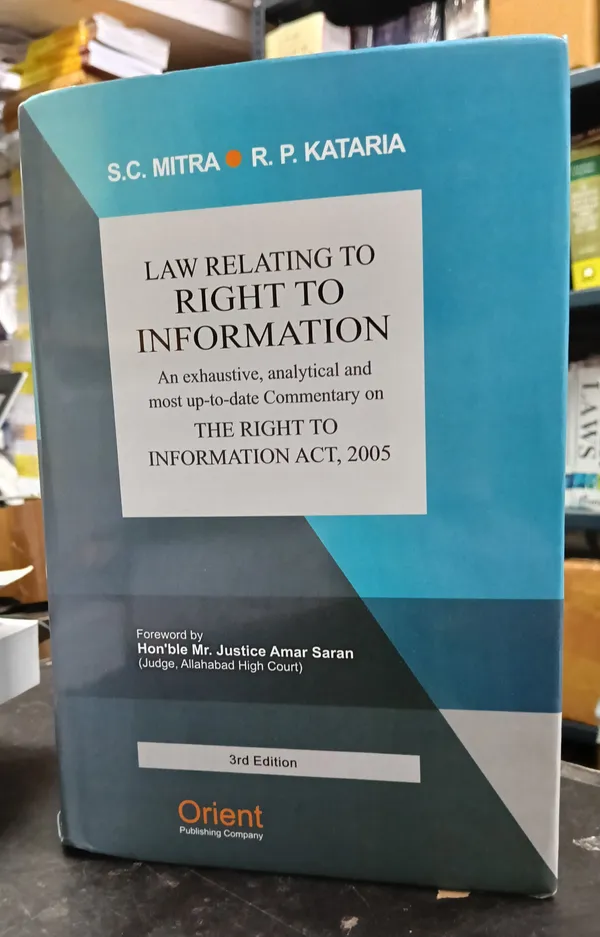
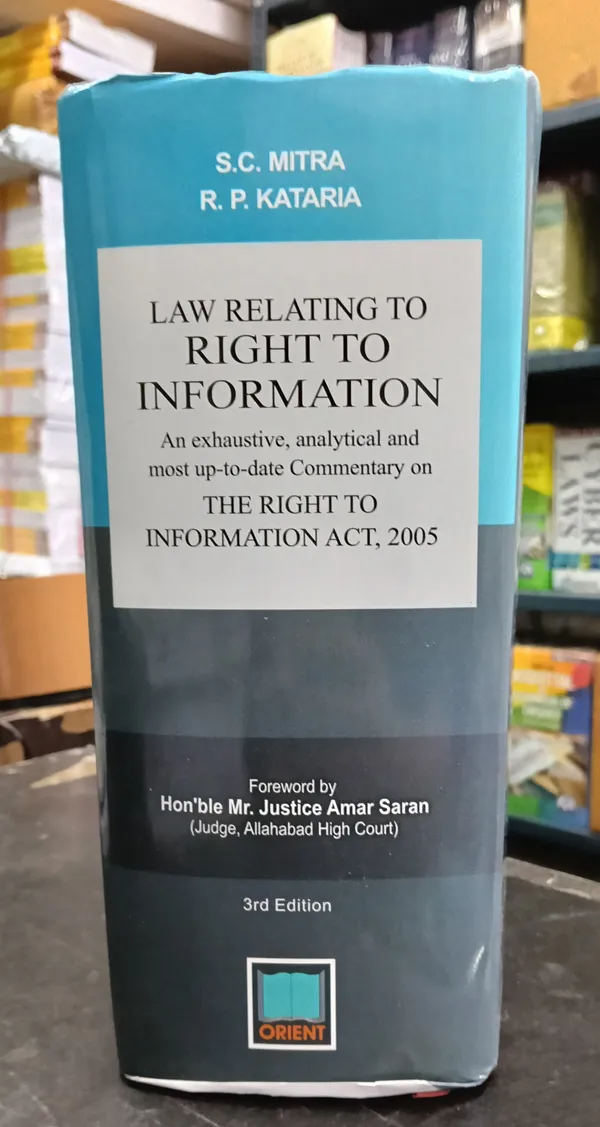
"Law Relating to Right to Information" (Third Edition), co-authored by legal experts S.C. Mitra and R.P. Kataria, and published by the Orient Publishing Company. It features a prominent foreword by Hon'ble Mr. Justice Amar Saran, a former judge of the Allahabad High Court.
This text serves as an exhaustive, analytical, and updated commentary on the Right to Information (RTI) Act, 2005. The book breaks down how transparency and public accountability operate within Indian governance, explaining both the constitutional principles of the "right to know" and the practical machinery required to request state-held data.
It addresses the fundamental balance between a citizen?? right to access public information and the government's need to protect national security, privacy, and state secrets.
Key Subjects Covered in the Book
Section-by-Section Legal Analysis: A structured breakdown of each clause in the RTI Act, 2005, clarifying the precise legislative intent and legal duties assigned to public institutions.
Judicial Interpretations & Landmark Case Law: Incorporates crucial, evolving rulings from the Supreme Court of India, various state High Courts, and Central/State Information Commissions. It tracks how the courts have expanded or limited the definitions of what constitutes "public authorities" and "information" over time.
Procedural and Filing Frameworks: A step-by-step guide outlining how a citizen can properly file an RTI application, the mandatory 30-day processing timelines, and the fee structure.
The Role of Information Commissions: In-depth analytical insights into the administrative powers, investigation tools, appeal mechanisms, and dispute resolution workflows governing the Central Information Commission (CIC) and State Information Commissions (SICs).
Exemptions and Restrictions: Meticulous evaluation of Section 8 and Section 9 of the Act, which legally allow public authorities to withhold specific datasets (e.g., intellectual property, cabinet papers, personal data, or strategic military information).
Penalties and Accountability Mechanics: Explains the legal and financial liabilities, including daily fines levied against Public Information Officers (PIOs) who block, delay, or maliciously destroy requested documents.
This treatise is tailored for legal practitioners, government public information officers, judicial officers, academic researchers, and transparency activists navigating the nuances of administrative accountability.